



Introduction: Reducing food waste starts with proper storage
Every year, millions of tons of fruits and vegetables end up in the trash, often because they spoil too quickly. Yet, with the right preservation techniques, you can easily double or even triple the shelf life of your fresh produce.
Not only will you save money, but you will also help reduce food waste. In this comprehensive guide, we will explore all the tips to keep your fruits and vegetables fresh longer, from the fridge to the pantry.
Understanding the basics: why do fruits and vegetables spoil?
Before diving into preservation techniques, it’s important to understand why your fresh produce deteriorates:
- Ethylene: A natural gas produced by some fruits that accelerates ripening
- Humidity: Too much moisture promotes mold, too little dries out produce
- Temperature: Each fruit and vegetable has its ideal storage temperature
- Oxygen: Exposure to air speeds up oxidation and browning
- Bacteria: They grow quickly on damaged produce
Rule #1: Separate ethylene-producing fruits and vegetables
Some fruits produce large amounts of ethylene gas, which causes other produce around them to ripen (and spoil) faster.
Major ethylene producers to isolate:
- Apples
- Bananas
- Avocados
- Tomatoes
- Peaches and nectarines
- Pears
- Plums
- Melons
Sensitive to ethylene (do not store nearby):
- Lettuce and salads
- Broccoli and cauliflower
- Cucumbers
- Carrots
- Potatoes
Tip: Use separate storage containers to isolate ethylene producers.

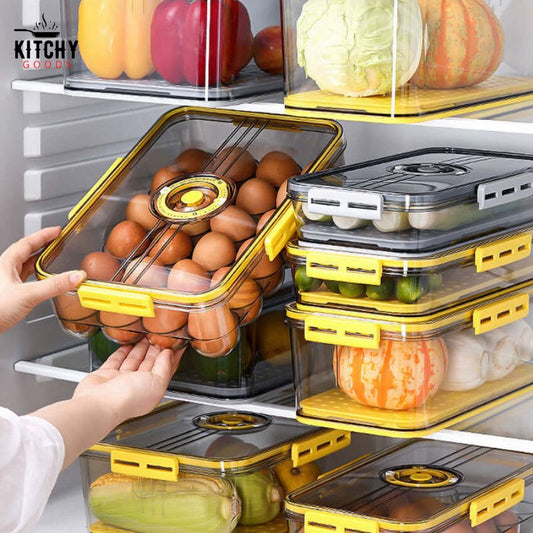
Airtight containers to separate and organize your fresh produce
In the refrigerator: what goes (and what doesn’t) inside
❄️ TO refrigerate:
Vegetables:
- Lettuce, spinach, arugula (in a bag with paper towels)
- Broccoli, cauliflower (in the vegetable drawer)
- Carrots, celery (in water or wrapped in foil)
- Mushrooms (in a paper bag)
- Asparagus (standing in a glass of water)
- Green beans
- Bell peppers
Fruits:
- Berries (strawberries, raspberries, blueberries) - do not wash before use
- Grapes
- Cherries
- Apples (after a few days at room temperature)
- Citrus fruits (if you want to keep them for more than 5 days)
🌡️ DO NOT refrigerate:
Vegetables:
- Tomatoes (lose their flavor and texture)
- Potatoes (starch turns into sugar)
- Onions (become soft)
- Garlic
- Squashes and pumpkins
- Sweet potatoes
Fruits:
- Bananas (turn black)
- Avocados (unless they are ripe and you want to slow down ripening)
- Unripe stone fruits (peaches, plums, apricots)
- Whole melons
- Pineapples
- Mangoes (unless very ripe)
Specific preservation techniques by product
🥬 Salads and fresh herbs
The absorbent paper method:
- Wash and dry your salad completely
- Place it in a container with absorbent paper at the bottom
- Add a sheet of paper on top
- Close tightly
- Duration: up to 10 days
For fresh herbs:
- Parsley, coriander, mint: like a bouquet in a glass of water in the fridge
- Basil: at room temperature in water (like flowers)
- Chives, thyme, rosemary: wrapped in damp absorbent paper
🥕 Carrots and celery
These vegetables quickly lose their crunch. To keep them fresh:
- Method 1: Cut them into sticks and store in water in the fridge (change water every 2-3 days)
- Method 2: Wrap them in aluminum foil (retains moisture)
- Duration: up to 3-4 weeks
🍓 Berries and red fruits
Berries are delicate and spoil quickly. Here's how to preserve them:
The vinegar bath (miracle technique):
- Mix 1 part white vinegar to 3 parts water
- Soak the berries for 30 seconds
- Rinse thoroughly with cold water
- Dry COMPLETELY (this is crucial)
- Store in a container with absorbent paper
- Duration: up to 2 weeks instead of 3-4 days
Why it works: Vinegar eliminates mold spores without altering the taste.
🥑 Avocados
Mastering avocado preservation is quite an art:
- Not yet ripe: Leave at room temperature
- To speed up ripening: Put them in a paper bag with a banana
- Ripe: In the fridge to slow ripening (up to 5 extra days)
- Cut: Keep the core, sprinkle with lemon juice, cling film in contact, in the fridge
🍅 Tomatoes
NEVER put your tomatoes in the fridge (unless they are too ripe and you want to gain 1-2 days):
- Store at room temperature, stem side down
- Avoid direct sunlight
- Separate them (they produce ethylene)
- Duration: 5-7 days
🥔 Potatoes and onions
Potatoes:
- Cool, dark, and dry place (12-15°C ideal)
- In a paper bag or cardboard box (not plastic)
- NEVER with onions (they rot each other)
- Remove those that sprout to avoid contaminating the others
- Duration: 2-3 months
Onions:
- Cool, dry, and well-ventilated place
- In a net or hung in tights (seriously!)
- Keep away from potatoes
- Duration: 2-3 months
Storage containers: choosing the right tool
Choosing the right container is crucial for optimal preservation:
Airtight glass or plastic containers
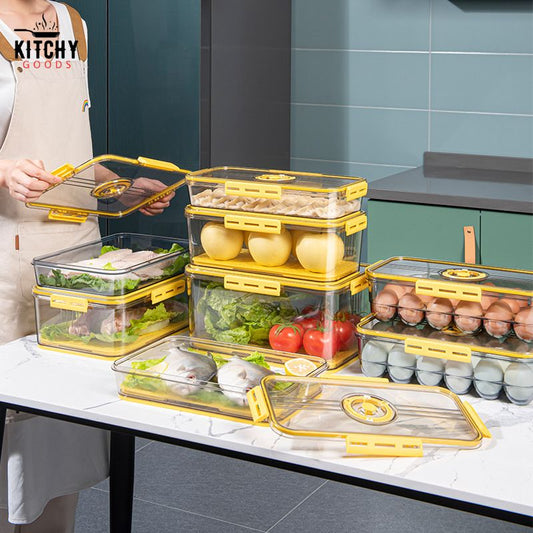
Ideal for cut vegetables, prepared salads, and leftovers. They protect against air and moisture.
Airtight containers to separate and organize your fresh products

Storage containers to keep your products fresh longer
Vacuum bags
Perfect for significantly extending shelf life, especially for freezing.

Vacuum sealing system for optimal preservation
Paper bags
Great for mushrooms, onions, and some fruits that need to "breathe."
Glass jars
Perfect for herbs in water, cut vegetables, and to easily see what you have.
Refrigerator organization: the FIFO method
FIFO means "First In, First Out." It’s the method used by professionals:
- Place new purchases behind the old ones
- Use turntables to easily access everything
- Label with the purchase or preparation date
- Do a weekly inventory to use what needs to be used

Turntable to organize and easily access your products
Freezing: your best anti-waste ally
Almost all fruits and vegetables can be frozen. Here’s how:
Fruits
- Berries: Wash, dry, spread on a tray, freeze, then transfer to a bag
- Bananas: Peel and slice (perfect for smoothies)
- Mangoes, pineapples: Cut into cubes, freeze on a tray then in a bag
- Citrus: Squeeze juice into ice cube trays
Vegetables
Most require blanching before freezing:
- Dip in boiling water for 2-3 minutes
- Immediately transfer to ice water
- Drain and dry completely
- Freeze on a tray then transfer to a bag
Vegetables that freeze well: Broccoli, cauliflower, green beans, peas, corn, spinach, peppers
To avoid: Lettuce, cucumber, fresh tomatoes, raw potatoes
Grandma’s tips that really work
1. Paper towel in the containers
Absorbs excess moisture that causes vegetables to rot. Change it when it’s damp.
2. Cork stopper in the vegetable drawer
Absorbs moisture and odors. Replace it every month.
3. Lemon for cut apples
Rub cut surfaces with lemon to prevent oxidation.
4. Herbs in oil
Chop your herbs, put them in ice cube trays, cover with olive oil, freeze. Perfect for cooking!
5. Vinegar to clean the vegetable drawer
Once a month, clean with white vinegar to eliminate bacteria and mold.
Signs that a fruit or vegetable is still good (or not)
✅ Still edible:
- Slightly wilted but firm
- Small superficial spots (cut them out)
- Slightly dull color
- Spotted bananas (perfect for cakes!)
❌ To throw away:
- Visible mold (even small - spores are everywhere)
- Unpleasant odor
- Slimy or sticky texture
- Completely soft and discolored
Planning: the key to wasting nothing
1. Shop smart
- Make a list and stick to it
- Buy according to your weekly menus
- Favor small frequent quantities over large purchases
- Buy some fruits at different stages of ripeness
2. Prepare your vegetables as soon as you get back from shopping
- Wash and cut vegetables for the week
- Prepare ready-to-eat salad portions
- You will be more inclined to use them if they are ready
3. Use the "3 zones" rule
- Zone 1 (front): To consume this week
- Zone 2 (middle): Still fresh, for next week
- Zone 3 (back): New purchases
What to do with overripe fruits and vegetables?
Instead of throwing away, transform!
Overripe fruits:
- Bananas: Banana bread, smoothies, banana ice cream
- Berries: Compote, coulis, smoothies
- Apples: Compote, pie, oven-baked apple chips
- Citrus fruits: Fresh juice, frozen zest, flavored water
Wilted vegetables:
- Mixed vegetables: Soup, homemade broth, curry
- Tomatoes: Tomato sauce, soup, roasted tomatoes
- Herbs: Pesto, flavored butter, infused oil
- Root vegetables: Mashed, gratin, oven chips
Summary table: optimal storage duration
In the refrigerator:
- Salads: 5-10 days (with absorbent paper)
- Carrots: 3-4 weeks (in water or aluminum foil)
- Broccoli: 7-10 days
- Berries: 1-2 weeks (with vinegar bath)
- Apples: 4-6 weeks
- Citrus fruits: 2-3 weeks
At room temperature:
- Tomatoes: 5-7 days
- Bananas: 3-5 days
- Avocados: 3-5 days (once ripe)
- Potatoes: 2-3 months (cool and dark place)
- Onions: 2-3 months (dry and ventilated place)
Conclusion: Simple actions for a major impact
Properly storing your fruits and vegetables is not complicated, but it requires a bit of organization and good habits. By applying these techniques, you will:
- ✅ Significantly reduce your food waste
- ✅ Save money on your groceries
- ✅ Enjoy fresher and tastier products
- ✅ Help protect the environment
- ✅ Simplify your kitchen organization
Start by applying 2-3 techniques that seem most useful to you, then gradually add others. You will quickly see the difference in your fridge and your wallet!
What is your favorite tip for preserving your fruits and vegetables? Share it in the comments!