


A dish drainer is one of the most commonly used accessories in a kitchen, yet it is often chosen hastily. Wrong size, rust-prone material, overflowing tray: poor choices quickly become costly. This guide helps you identify the essential criteria to select a dish drainer truly suited to your space, habits, and kitchen style. In just a few minutes of reading, you'll know exactly what to look for.
Why the dish drainer is a key kitchen accessory

In a well-organized kitchen, every accessory has its place and role. The dish drainer is no exception. It comes into play after every hand wash, and sometimes even as a complement to the dishwasher for delicate items. A good dish drainer should allow quick and hygienic draining, without letting water stagnate or clutter the countertop.
In France, many households still wash some of their dishes by hand, especially fine glasses, chef’s knives, or wooden utensils. The dish drainer then becomes a daily tool, used several times a day. Poorly chosen, it becomes a source of frustration. Well chosen, it fits discreetly into the kitchen and makes life easier.
There are many criteria to consider: the available size on the countertop, the material, capacity, presence of a drip tray, and of course the design. Every household has its own constraints, and there is no universal solution.
Essential criteria for choosing the right dish drainer

Material: stainless steel, plastic, or lacquered metal?
The material is the first criterion to examine. Stainless steel remains the benchmark: resistant to corrosion, easy to clean, durable, and attractive. It suits kitchens with a modern or industrial style perfectly. Plastic is lighter and less expensive, but it ages poorly and can retain odors. Lacquered metal offers a nice visual finish but is sensitive to shocks and scratches.
For intensive use and maximum longevity, brushed or anti-rust treated stainless steel is the best investment.
Size and capacity
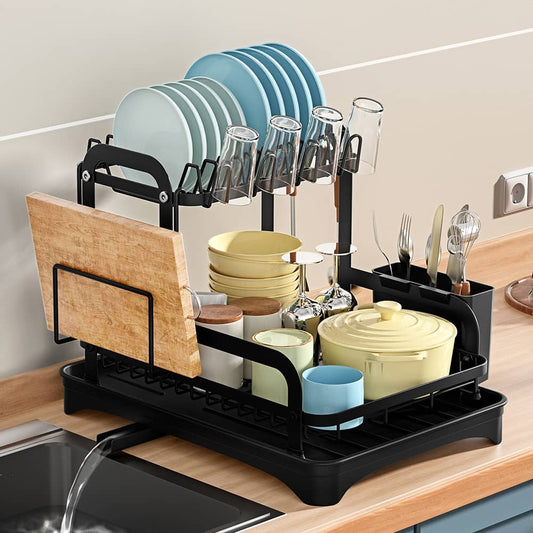
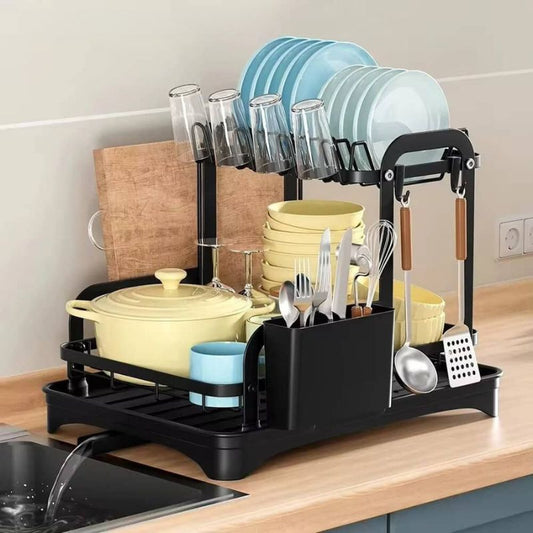
A dish drainer that is too small forces multiple cycles after each meal. Too large, it takes over the countertop. Measure the available space next to your sink before any purchase. For a household of 2 to 4 people, a capacity that can hold 6 to 8 plates, a few glasses, and cutlery is generally sufficient.
Drip tray
A dish drainer without a drip tray lets water flow directly onto the countertop, which promotes humidity and mold. Opt for a model with a removable and sloped tray that automatically directs water to the sink. Some rotating models even allow you to adjust the flow direction according to your kitchen layout.
Stability and design
A dish drainer that slips or tips over under the weight of plates is dangerous and frustrating. Check for non-slip feet and a base wide enough to ensure stability, even when loaded.
Practical tips for maintaining your dish drainer

A poorly maintained dish drainer quickly becomes a breeding ground for bacteria and limescale. A few simple steps help keep it clean and functional over the long term.
- Rinse the drip tray daily to prevent water stagnation and mold growth.
- Descale regularly with diluted white vinegar, especially in areas with hard water.
- Dry the drainer once or twice a week with a clean cloth to preserve the shine of the stainless steel.
- Avoid abrasive sponges on lacquered or treated surfaces, which can scratch the coating.
- Disassemble removable parts (tray, dividers) for a deep clean once a week.
A quality stainless steel dish drainer, well maintained, can last more than ten years. Stainless steel owes its anti-corrosion properties to its chromium content, making it the reference material for kitchen accessories exposed to moisture.
Our selection of dish drainers and sink accessories at Kitchygoods

At Kitchygoods, we have selected kitchen accessories designed to combine practicality, durability, and aesthetics. Here are our most suitable products to organize the space around your sink.


Discover our full range in the Kitchen Storage collection to organize every corner of your kitchen with style.
Conclusion
Choosing a dish drainer suited to your kitchen is above all a matter of size, material, and use. Take the time to assess your available space, washing frequency, and aesthetic preferences before buying. A good stainless steel drainer with a drip tray and non-slip feet will serve you well for years. Explore our selection at Kitchygoods and find the accessory that fits your kitchen perfectly.