


Introduction: Stress-free cooking starts by avoiding common pitfalls
We have all made mistakes in the kitchen. A dish too salty, overcooked meat, vegetables sticking... These little annoyances can turn a moment of pleasure into a source of frustration. The good news? Most of these mistakes are easily avoidable once you know them.
In this article, we will explore the 15 most common cooking mistakes and, above all, give you concrete solutions to avoid them. Whether you are a beginner or an experienced cook, these tips will help you improve your culinary skills and gain confidence in the kitchen.
1. Not reading the recipe fully before starting
This is probably the number one mistake, even among experienced cooks. We dive headfirst into a recipe without reading it completely, only to discover halfway through that it requires marinating for 2 hours or that some ingredients need to be at room temperature.
The solution:
- Always read the recipe from start to finish before beginning
- Check that you have all the necessary ingredients and utensils
- Note resting, marinating, or refrigeration times
- Prepare your mise en place (all ingredients measured and ready)
Pro tip: Use a precise kitchen scale to measure your ingredients from the start. It will save you valuable time.

A precise scale for perfect measurements
2. Using a cold pan or pot
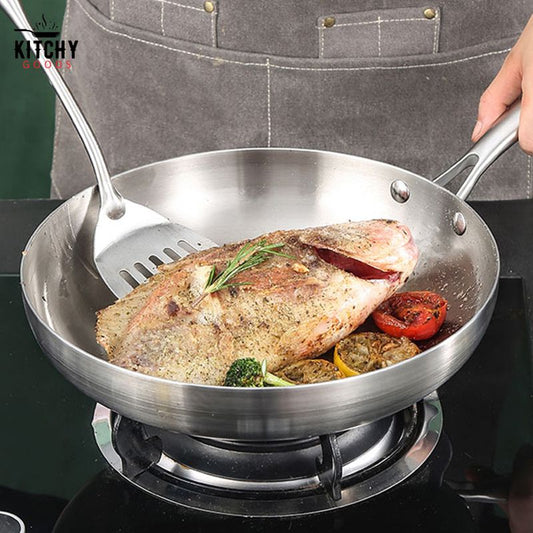
Putting your food in a cold pan is a classic mistake that prevents the formation of a nice golden crust and promotes sticking. This is especially true for meat, fish, and vegetables.
The solution:
- Always preheat your pan or pot before adding oil
- Wait for the oil to be hot (it should shine and ripple slightly)
- To test: pour a drop of water, it should sizzle immediately
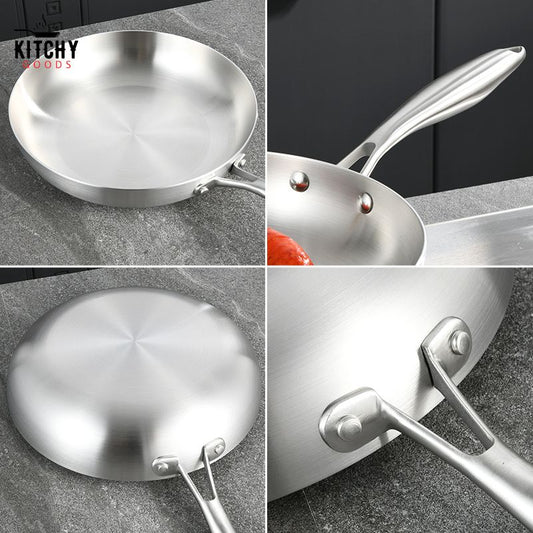
- For stainless steel: use the "water bead" technique where a droplet dances on the surface
Exception: For creamy scrambled eggs, start on low heat in a cold pan.
3. Overloading the pan
Putting too much food in a pan lowers the temperature and causes steaming rather than a nice sear. Result: soft, gray food instead of golden and crispy.
The solution:
- Leave space between each piece (they should not touch)
- Cook in batches if necessary
- Use a pan suitable for the amount of food
- For large quantities, prefer oven cooking
4. Not seasoning enough (or at the wrong time)
Salt and spices are not just "finishing touches" - they are essential to bring out flavors. Seasoning only at the end results in a bland dish with a layer of salt on top.
The solution:
- Season at every stage of cooking ("layering")
- Salt the cooking water for pasta, rice, and vegetables generously
- Season meat 30-40 minutes before cooking (or just before)
- Taste regularly and adjust as you go
- Use quality salt (fleur de sel, Guérande salt)
Golden rule: It’s easier to add salt than to remove it. Go gradually.
5. Flipping meat too often
The temptation to constantly check doneness by flipping the meat is strong. But each time you flip it, you interrupt crust formation and extend cooking time.
The solution:
- Flip the meat only once (maximum twice)
- Wait for it to release naturally from the pan
- If it still sticks, it’s not ready to be flipped
- Use a cooking thermometer to check the internal temperature

A thermometer for perfect cooking every time
6. Cutting meat immediately after cooking
Cutting meat immediately after removing it from the pan or oven causes all its juices to escape, leaving dry and less flavorful meat.
The solution:
- Let the meat rest 5-10 minutes (small pieces) or 15-20 minutes (large roasts)
- Cover it lightly with aluminum foil (loosely)
- The internal temperature will continue to rise by 2-3°C (carryover cooking)
- The juices will redistribute evenly throughout the meat
7. Using dull knives
A dull knife is not only ineffective but also dangerous. It slips on food instead of cutting cleanly, increasing the risk of injury.
The solution:
- Sharpen your knives regularly (every 2-4 weeks depending on use)
- Use a sharpening stone or honing rod for maintenance
- Invest in quality knives
- Use a wooden cutting board to preserve the sharpness

Quality knives for precise and safe cutting

An acacia wood board to preserve your blades
8. Adding garlic too early
Garlic burns very quickly and becomes bitter. Adding it at the same time as the onions is a common mistake that spoils its delicate aroma.
The solution:
- Add the garlic last, 30-60 seconds before adding the liquid
- Cook it over medium heat (never high heat)
- As soon as it becomes fragrant, move on to the next step
- For long cooking times, add it twice (beginning and end)
9. Rinse the pasta after cooking
Rinsing pasta removes the starch that helps the sauce stick. You end up with slippery pasta and a sauce that doesn't hold.
The solution:
- Never rinse pasta (except for cold salads)
- Drain quickly while keeping some cooking water
- Mix immediately with the sauce
- Add cooking water to bind the sauce if necessary
- The starch will create a creamy emulsion
10. Opening the oven too often
Every time you open the oven door, the temperature drops by 10-15°C. This prolongs cooking time and can affect the texture of your dishes (cakes collapsing, soufflés deflating).
The solution:
- Trust your timer
- Use the oven light to check visually
- Only open at the time indicated in the recipe
- For cakes, wait at least 3/4 of the cooking time before opening

A reliable timer to never miss your cooking
11. Using olive oil for high temperatures
Extra virgin olive oil has a relatively low smoke point (160-190°C). Beyond that, it degrades, loses its nutritional qualities, and can become toxic.
The solution:
- Reserve extra virgin olive oil for cold dressings
- For high-temperature cooking, use: avocado oil, grapeseed oil, or sunflower oil
- Clarified butter (ghee) is excellent for stir-frying
- For frying, favor peanut oil
12. Neglecting mise en place
“Mise en place” (preparing everything before starting) is the secret of professional chefs. Without it, you find yourself chopping onions while the garlic burns in the pan.
The solution:
- Prepare all your ingredients before turning on the heat
- Wash, peel, cut, and measure everything in advance
- Arrange ingredients in order of use
- Take out all necessary utensils
- You will cook more calmly and with better results
13. Cooking vegetables too long
Overcooked vegetables lose their color, crunchy texture, nutrients, and flavor. This is especially true for green vegetables.
The solution:
- Cook vegetables "al dente" – they should retain some crunch
- Use the blanching technique: salted boiling water then ice water bath
- For green vegetables, 2-4 minutes is usually enough
- Test regularly with the tip of a knife
- Remove from heat just before perfect cooking (carryover cooking)
14. Using ingredients straight from the refrigerator
Cold ingredients cook unevenly. Cold meat does not sear properly, cold eggs don’t whip up, cold butter doesn’t incorporate well.
The solution:
- Take the meat out 30-60 minutes before cooking
- Take out the eggs, butter, and dairy products 20-30 minutes beforehand
- For cakes, all ingredients must be at room temperature
- Exception: puff pastry and shortcrust pastry require cold ingredients
15. Not tasting during cooking
Waiting until the end to taste is a major mistake. You can no longer adjust seasoning or correct flavor imbalances.
The solution:
- Taste at every important step of the recipe
- Adjust seasoning gradually
- Balance flavors: salty, sweet, sour, bitter, umami
- Keep a clean spoon handy
- Trust your palate – it’s your best tool
Bonus mistakes: specific traps
For pastries:
- ❌ Not respecting exact quantities (pastry is a science)
- ❌ Opening the oven during cake baking
- ❌ Not sifting the flour (lumps guaranteed)
- ❌ Overworking the dough (it becomes elastic and tough)
For sauces:
- ❌ Adding cream to a boiling sauce (it breaks)
- ❌ Not deglazing the pan (you lose the caramelized bits)
- ❌ Boiling a sauce made with egg yolk (it curdles)
Good habits to adopt right now
Beyond avoiding mistakes, here are some habits that will transform your cooking:
1. Organize your workspace
A clear and organized workspace allows you to cook more efficiently and with less stress.
2. Clean as you go
Don’t let the dishes pile up. An empty sink and a clean workspace make cooking more enjoyable.
3. Keep a notebook
Note your successes, adjustments, and mistakes. This is how you will progress the fastest.
4. Invest in quality utensils
Good tools make all the difference. Prioritize quality over quantity.
5. Practice regularly
Cooking is an art learned through practice. The more you cook, the more you develop your intuition.
Conclusion: Mistakes are part of learning
Remember that even the greatest chefs made all these mistakes at the start. The important thing is not to never make mistakes, but to learn from them and continuously improve.
By avoiding these 15 common mistakes, you will not only improve the quality of your dishes but also gain confidence and enjoyment behind the stove. Cooking should remain a moment of creativity and sharing, not a source of stress.
So, next time you get cooking, keep these tips in mind, equip yourself with the right utensils, and above all: have fun! Because that is the essence of homemade cooking.
And you, what is the mistake you have most often made in the kitchen? Feel free to share your experience in the comments!