


Knowing how to perfectly cook your meat is one of the most sought-after skills in cooking. An overcooked steak, a dried-out roast, or a chicken still pink near the bone: these classic mistakes can ruin an entire meal. Yet, with the right techniques, the right tools, and a few simple guidelines, it is entirely possible to achieve perfectly cooked meat every time. In this comprehensive guide, we explain everything: core temperatures by meat type, suitable cooking methods, mistakes to avoid, and essential utensils to cook like a chef — at home.
Understanding core temperatures: the key to successful meat cooking

The first mistake amateur cooks make is relying solely on visual appearance or cooking time. The true measure of successful cooking is the core temperature of the meat. Each type of meat has its own thresholds, and respecting them ensures both food safety and taste pleasure. This is where a cooking thermometer becomes the number one tool for any serious cook.
According to the ANSES (French Agency for Food, Environmental and Occupational Health & Safety), ground meat must reach 70°C at the core to eliminate pathogenic bacteria such as E. coli or Salmonella. For other meats, recommendations vary:
| Meat | Rare | Medium | Well done |
|---|---|---|---|
| Beef (steak) | 50–55°C | 60–65°C | 70°C+ |
| Lamb | 55–60°C | 65°C | 72°C+ |
| Pork | — | 63°C | 71°C+ |
| Poultry (chicken, turkey) | — | — | Minimum 74°C |
| Ground meat | — | — | Minimum 70°C |
Choose the right cooking method according to the cut of meat

Not all meats are cooked the same way. The choice of cooking method depends on the cut, its thickness, fat content, and the desired result.
Searing in a stainless steel pan (direct cooking)
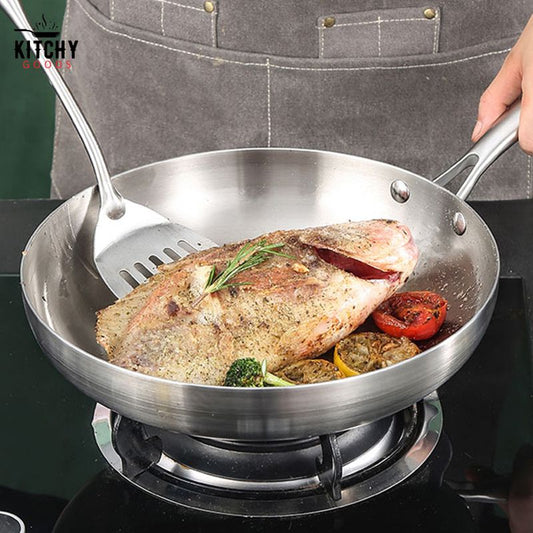
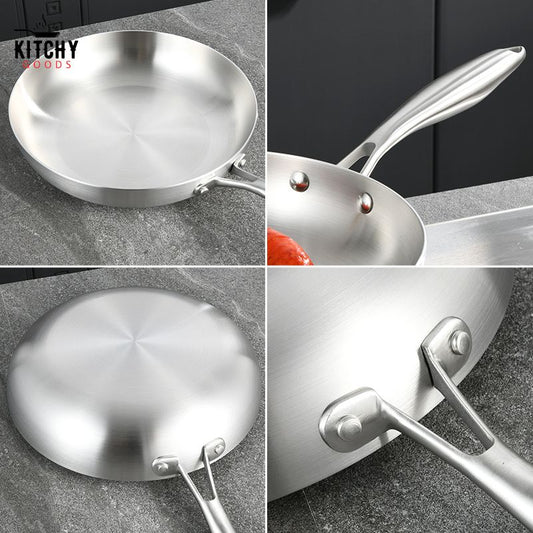
Ideal for thin to medium cuts: steaks, cutlets, chops. The key: a very hot stainless steel pan before placing the meat, to create a golden crust (Maillard reaction) that traps the juices. Stainless steel heats evenly and withstands high heat without releasing harmful substances, unlike non-stick coatings. Sear 2 to 3 minutes per side, then let rest under foil.
Oven cooking (roasting)
Perfect for large cuts: roasts, legs, whole poultry. Start by searing the meat in a pan to brown all sides, then bake at 180–200°C. Use a cooking thermometer to check the internal temperature without cutting the piece. Baste regularly with the cooking juices.
Low-temperature cooking
Technique favored by chefs: the meat is cooked at 60–80°C for a long time. Result: incredibly tender and juicy meat, cooked evenly. The cooking thermometer is essential here to monitor the temperature rise precisely.
Barbecue (direct/indirect cooking)
For grilling, distinguish between direct cooking (above the coals, for thin cuts) and indirect cooking (next to the coals, lid closed, for large cuts). Check the internal temperature with your probe thermometer for perfect results every time.
Classic mistakes to avoid so you never ruin your meat again

Even with the best intentions, some recurring mistakes consistently sabotage cooking. Here are the most common ones and how to fix them:
1. Taking the meat directly from the refrigerator
Cold meat placed directly into cooking cooks unevenly: the outside burns before the center is hot. Solution: take your meat out 30 to 60 minutes before cooking to bring it to room temperature.
2. Piercing the meat during cooking
Using a fork to turn or test the meat pierces the fibers and lets the juices escape. Always use tongs or a spatula. To test the cooking precisely, insert the probe of your cooking thermometer into the center of the piece.
3. Not letting the meat rest
After cooking, the juices concentrate in the center of the cut. If you slice it immediately, they flow onto the plate. Let the meat rest 5 to 10 minutes under a sheet of aluminum foil so the juices redistribute evenly.
4. Not preheating your pan
An insufficiently hot pan boils the meat instead of searing it. With a stainless steel pan, wait until a drop of water beads and rolls (Leidenfrost effect) before adding fat and meat: this is the sign that the temperature is ideal.
5. Salting too early (or too late)
Salt just before cooking or, for large cuts, 24 hours in advance (dry brining) for deep penetration. Avoid salting in between: this is when moisture comes out without being reabsorbed.
Kitchygoods products to master cooking your meat

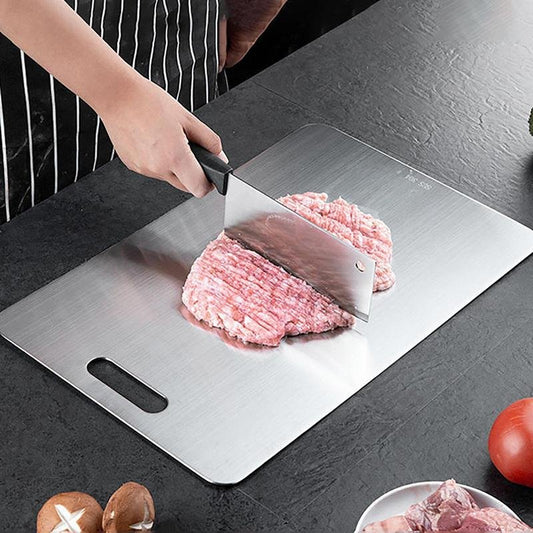
To put all these techniques into practice, you need to equip yourself with reliable and durable tools. At Kitchygoods, two products are absolutely essential to never miss cooking your meat again.


Find all our premium kitchen utensils to cook with precision and confidence.
Conclusion: perfect meat is a matter of method
Never miss cooking your meat perfectly again; it's not a matter of innate talent, but of method, temperature, and equipment. By respecting the internal temperatures with a cooking thermometer, searing in a stainless steel pan, and letting your meat rest before slicing, you'll achieve restaurant-quality results every time. Equip yourself with the right tools at kitchygoods.com and turn your kitchen into a true culinary workshop.