



How to Naturally Clean a Burnt Stainless Steel Pan
Cleaning a burnt stainless steel pan is one of the most common challenges in the kitchen — yet one of the easiest to solve with the right techniques. Blackened bottoms, burnt residues, stubborn deposits: a stainless steel pan that has suffered from too high heat or being left on the stove is not doomed. Thanks to natural ingredients you already have in your cupboards — baking soda, white vinegar, lemon — it is possible to restore a shiny, spotless stainless steel surface without harsh chemicals, without scratching, and without excessive effort. In this comprehensive guide, we explain why stainless steel burns, which natural methods really work, and how to maintain your pan to prevent it from happening again.
Why Does a Stainless Steel Pan Burn and What Damage Does It Cause?

Stainless steel is an extremely durable material — but not infallible against excessive heat. Several situations cause the blackening or burning of a stainless steel pan:
Dry cooking — Forgetting to add fat or water to the pan before heating is the most frequent cause. Food residues burn directly onto the metal.
Too high heat — Stainless steel conducts and retains heat evenly. Excessive heat causes a rapid temperature rise that burns food before it cooks properly.
Leaving it on the stove — A pan left unattended, even with liquid, can have its contents completely evaporate and residues carbonize.
Limescale deposits — In hard water areas, limescale builds up on the bottom and sides, creating stubborn white stains that alter the stainless steel’s appearance.
The good news: unlike a non-stick pan whose coating is permanently damaged by excessive heat, a burnt stainless steel pan is almost always recoverable. Stainless steel does not chemically degrade from heat — it’s only surface residues that need to be dissolved or removed.
The Best Natural Methods to Clean a Burnt Stainless Steel Pan

Here are the four most effective natural methods, ranked by burn severity:
Method 1 — Boiling Water (light burn)
For a slightly stuck bottom, start with the simplest method: pour water into the pan, bring to a boil, and let simmer for 5 to 10 minutes. Residues often loosen on their own. Then scrape with a wooden or silicone spatula.
Method 2 — Baking Soda (moderate burn)
Baking soda is the number one ally for natural stainless steel cleaning. Generously sprinkle the bottom of the pan, add a little water to form a paste, and let sit for 30 minutes to 1 hour. Then scrub with a non-abrasive sponge using circular motions. For tougher cases, boil the water + baking soda mixture (2 tablespoons for 500 ml of water) for 10 minutes.
Method 3 — White Vinegar (limescale deposits + severe burn)
White vinegar is especially effective against limescale deposits and stubborn stains. Pour an equal parts mixture of water and white vinegar into the pan, bring to a boil, and let simmer for 10 minutes. Let cool, then scrub. For a double effect, combine vinegar and baking soda: pour the hot vinegar first, then add baking soda — the fizzing reaction loosens burnt residues.
Method 4 — Lemon (final shine)
After cleaning with baking soda or vinegar, rub the inside and outside of the pan with half a lemon. Citric acid dissolves the last residues and restores the stainless steel’s natural shine. Rinse thoroughly with clear water.
Favoring natural household products like baking soda, white vinegar, and lemon is not only effective but also much less harmful to the environment than conventional chemical detergents — an approach supported by the ADEME (Agency for Ecological Transition).
Pro Tips for Impeccable Stainless Steel and Mistakes to Avoid

Beyond cleaning methods, here are the golden rules from professionals to keep a stainless steel pan in perfect condition:
1. Never use steel wool or metal abrasive pads. These materials irreversibly scratch the stainless steel surface, creating micro-scratches where residues accumulate even more easily. Always prefer a soft sponge or a brush with soft bristles.
2. Always let cool before cleaning. Plunging a hot stainless steel pan into cold water causes thermal shock that can warp the bottom, especially on multi-layered base models. Wait until the pan is warm before cleaning.
3. Dry immediately after rinsing. Hard water left to dry on stainless steel creates stubborn white stains. Simply wiping with a clean cloth after each wash prevents them.
4. Preheat properly before adding food. Most burns on stainless steel are due to poor heat management. Always preheat the pan empty over medium heat, test with a drop of water (it should form a bead that rolls), then add fat or liquid.
5. Use the right heat level. Stainless steel does not need high heat to heat effectively. Medium heat suffices in most cases. Reduce the heat once the temperature is reached.
6. Clean promptly after use. The longer you wait, the more residues stick. Immediate soaking in hot water after cooking greatly facilitates cleaning.
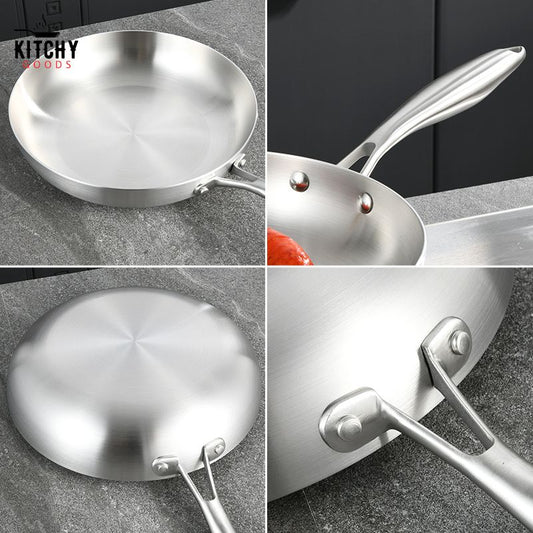
Our Kitchygoods Stainless Steel Pans: Designed to Last and Easy to Maintain

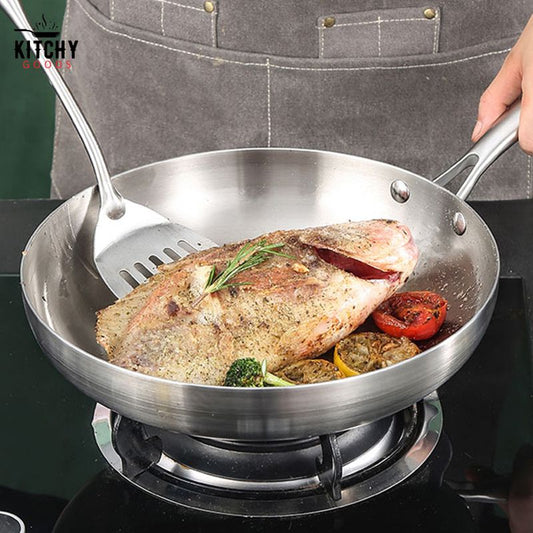
At Kitchygoods, we have selected stainless steel utensils designed to withstand intensive use while remaining easy to maintain. Our stainless steel range is designed for demanding cooks who want durable, healthy, and high-performance tools.


Discover our full range in the Kitchygoods Cookware Collection.
Conclusion: Your Burnt Stainless Steel Pan Has a Second Life
A burnt stainless steel pan is never a lost cause. With baking soda, white vinegar, or lemon, you can restore a shiny stainless steel surface in minutes, without chemicals and without damaging the material. The key is to act quickly, use the right techniques, and adopt good cooking habits to prevent it from happening again. Investing in a quality stainless steel pan — like those in the Kitchygoods range — also means choosing a material that cleans easily and lasts for years. Discover our selection of stainless steel utensils at Kitchygoods and cook better every day.